Note: this is the second article in a series of articles regarding circulatory system and the delicacies you may have missed. You can find the first article in the series here.
A second plane hit the second tower.

Image source (+)
A second plane hit the second tower. America is under attack.
Famously whispered into George W. Bush’s ears by his chief of staff on 11th September 2001.
Two Planes.
Number of planes is a discrete variable. One plane can hit the towers. Two planes can hit the towers. Three planes can hit the towers. But we can’t have 1.5 planes hitting the towers.
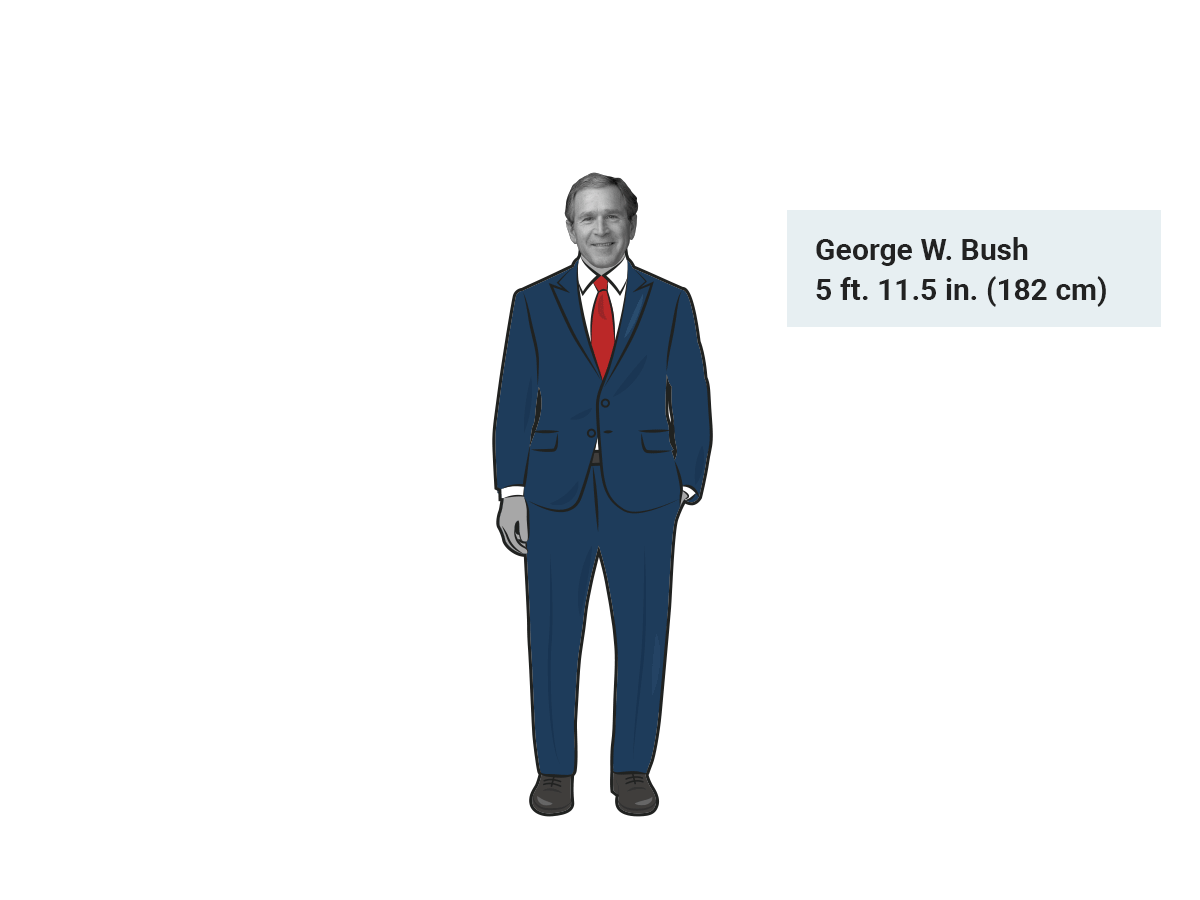
Image source (+)
On the contrary, height is a continuous variable. George W Bush is 182 centimetres tall. Donald Trump is 191cm tall. There are infinitely many real numbers between 182cm and 191cm, and a person’s height can take the value of any of these numbers. Thus if you were a god-like being, you could fabricate infinite people taller than Bush and shorter than Trump.
Do you know what transistors and capillaries have in common?
Our body is responsible to control blood distribution blood among different organs. When a person is exercising more blood is redistributed to their muscles. When one has ingested food more blood is redistributed to their gastrointestinal tract(GI tract). When one is experiencing hot weather more blood is redistributed to their cutaneous circulation to dissipate heat and the inverse happens in cold weather to preserve heat. It seems that our body is always altering total volumetric blood flow to various organs. But what exactly happens to different blood vessels when total volumetric blood flow to, let’s say, GI tract increases. Arterioles dilate to redistribute more blood into GI circulation. Thus volumetric blood flow through arterioles leading to GI tract and the flow through venules and veins carrying blood back to the heart increases. The arterial tree and venous tree are continuous systems in nature. When an organ is in need, the volumetric blood flow through them can increase gradually according to the volume demanded. What about the overlooked middle child? What happens to volumetric blood flow through each capillary?
Before answering that question, recall Circulation - an unnoticed delicacy(1) and recall blood velocity. Blood velocity is a key player in capillaries. If blood moves too fast nothing can be exchanged between capillary lumen and interstitial fluid. Thus when an organ needs more oxygen, the body can’t simply increase blood flow through all capillaries or there would be no time to exchange substances due to extreme blood velocity.
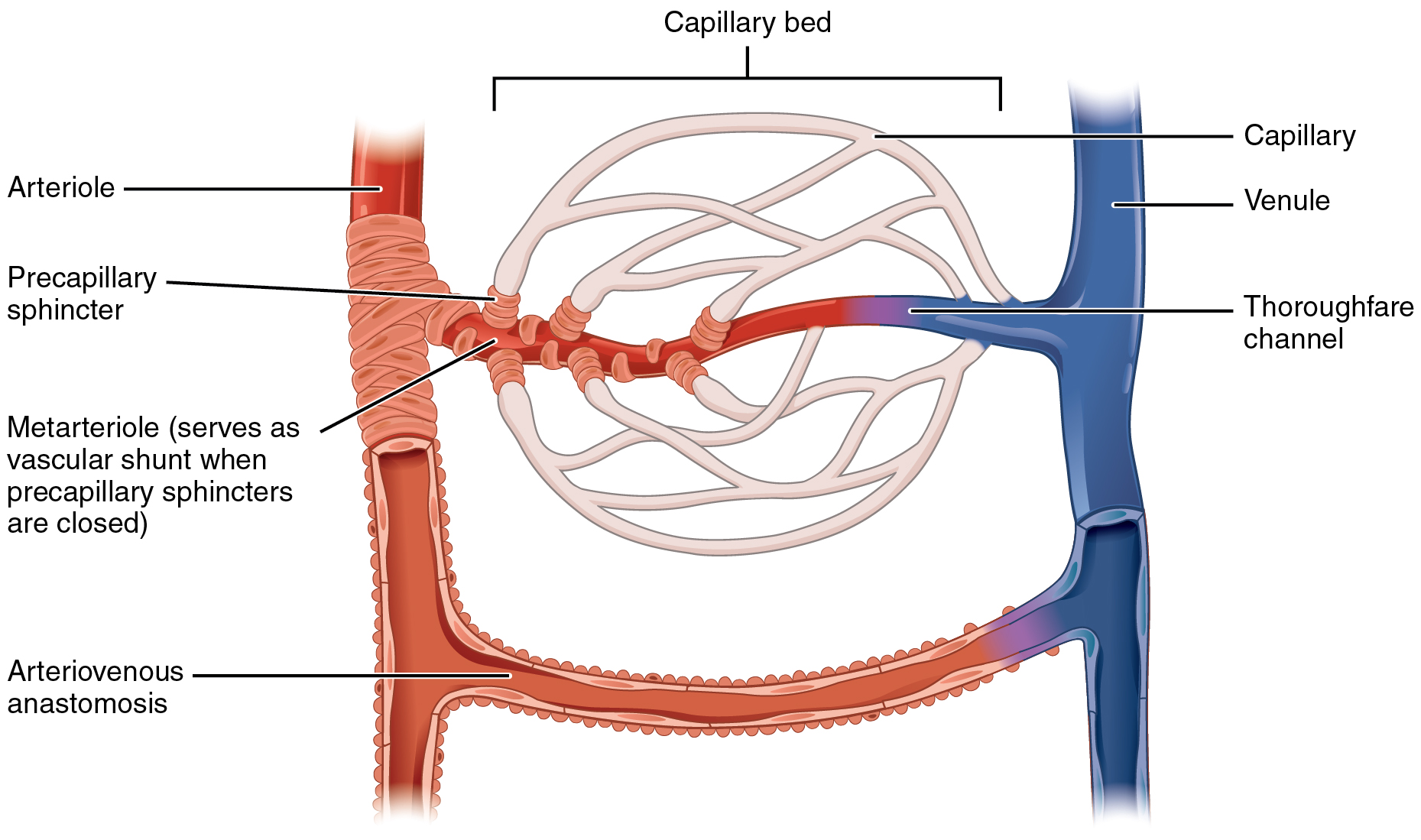
Image source (+)
There is a essential distinction between capillaries and other vessels due to this aspect. Capillaries, unlike arterioles, posses a discrete nature. Many capillaries are gated by structures called pre-capillary sphincters. You can approximate capillaries as binary beings. They are either open or close. Most of them are closed at a time. Only 25 to 35 percent of capillaries are perfused at ambient conditions. As a result, when total volumetric blood flow input to a capillary bed increases, instead of each capillary receiving more blood, more capillaries are perfused. Truly brilliant. The body can increase an organ’s perfusion, without ever overflowing a single capillary.
I emphasised approximate for a reason. Recall the cutaneous circulation example I made. In that case, capillaries diameter changes passively. At times of hyperthermia, a lot of blood flows to cutaneous circulation. A lot. Capillaries dilate due to the surge in volumetric blood flow.
Textbooks usually mention the discrete intermittent nature of capillary bed in their micro-circulation chapters. However after the first mention they proceed to examine the capillary bed as whole. They average out the volumetric flow through all capillaries and through time. So now it’s as if there is a continuous flow through the capillaries. But one shall never forget the discrete nature of blood flow and the necessity to maintain blood velocity in capillaries or they’d oversee a significant aspect of circulatory system.